
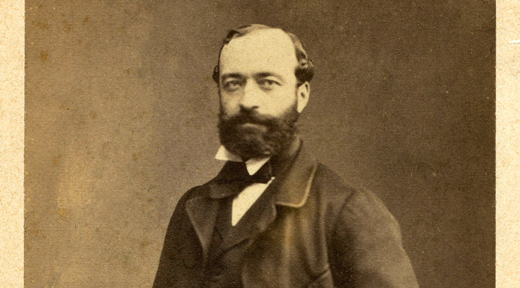
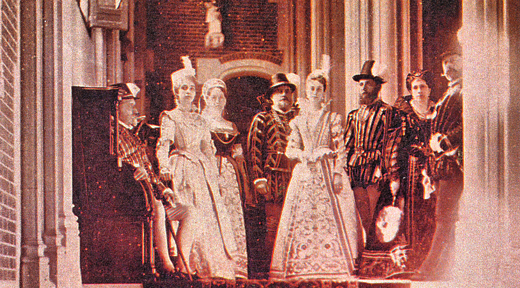
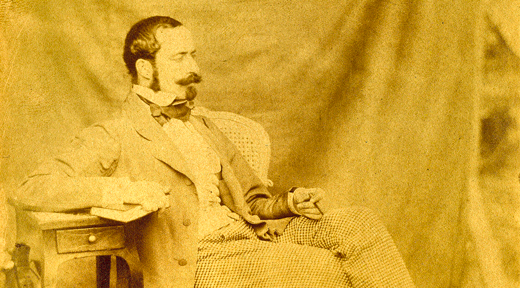
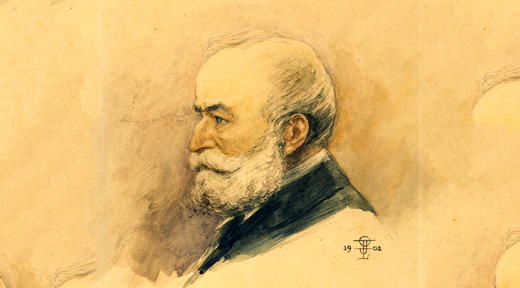
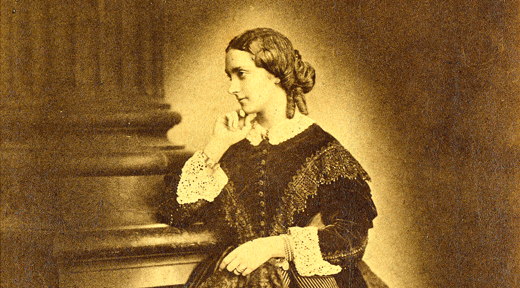
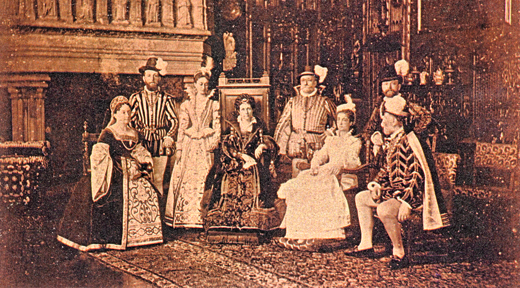
The representative in Paris of the family bank based in Grenoble, Émile Gaillard was also a collector, with a particular passion for the art of the fifteenth and sixteenth centuries. He was Chopin’s favourite pupil: Chopin composed a piece for him. He was a man who liked entertaining and in 1885, to inaugurate his mansion house, he gave one of the most lavish parties seen in Paris at the time.
The builder of the Hôtel Gaillard, the mansion that will house the Cité de l’Économie et de la Monnaie, was a remarkable character.
Born into a family of the Grenoble haute bourgeoisie, Émile Gaillard was the grandson of Théodore François Gaillard, founder of a bank in the second half of the eighteenth century, and the son of Théodore Eugène Gaillard, mayor of Grenoble (1858-1865).
As the representative in Paris of the family bank, Émile Gaillard rubbed shoulders with the great bankers of his time (Pereire, for example). His banking activities were eclectic: for example, he contributed to the financing of the railways, managed the property of the Count of Chambord, and established contract with Victor Hugo.
Émile Gaillard had highly developed artistic tastes. In his youth, he was a pupil of Chopin; according to several sources, he was his best pupil. Chopin dedicated a mazurka to him. He himself composed several pieces for piano.
Titre du paragraphe
Above all, he was fascinated by medieval and Renaissance art. Over the years, he built up a considerable collection of furniture, decorative objects, tapestries and other works of art from this period. With his residence in rue Daru becoming too small to accommodate his collection, in 1878 he decided to buy a piece of land on the Plaine Monceau, where most building activity was taking place. The construction of a mansion house, whose architecture was inspired particularly by the Louis the 12’s wing of the Château of Blois, provided him with the perfect decor for his collection.
The inauguration of his mansion in 1885 was marked by a lavish party, reported by the press of the time, at which the Gaillard family received their guests dressed in costumes from the time of Henri II. Émile Gaillard was however rather discreet in temperament and generally he only welcomed into his mansion a small number of intimate friends and enlightened art lovers.
He had five children (three daughters and two sons) with his wife, Amélie Vassal. He died in 1902.
After his death, the family bank was sold to the Crédit Lyonnais by his heirs and most of his collection was disposed of: a big auction was held in June 1904. The Hôtel Gaillard, which was also put on sale in 1904, only found a buyer in 1919, with its acquisition by the Banque de France with the intention of turning it into one of its branches.
Chopin - Mazurka “À Émile Gaillard”
There was a chance that it would remain a manuscript dedicated as a souvenir, but in 1841 it was published (Émile Gaillard was a pupil of Chopin and became his friend; he held the composer in very high regard).
This work was even assigned the number Opus 43, albeit by mistake as the Tarentella already had this number. This mazurka will be known to posterity by the name of the person it was dedicated to, i.e. the Mazurka “À Émile Gaillard”. Filled with nostalgia, this mazurka, which has a fine section in octaves, ends in a very original way on a long trill. (Source : Pianart)
Published on 09 May 2011. Updated on 11 October 2022